Blockchain layers are different levels of the protocols and technologies that upgrade the functionality and scalability of blockchain networks. So, there are 3 layers in the blockchain system. In the continuation from the VXTORO exchange, we will discuss what blockchain layers are and their use.
What is Layer 1?
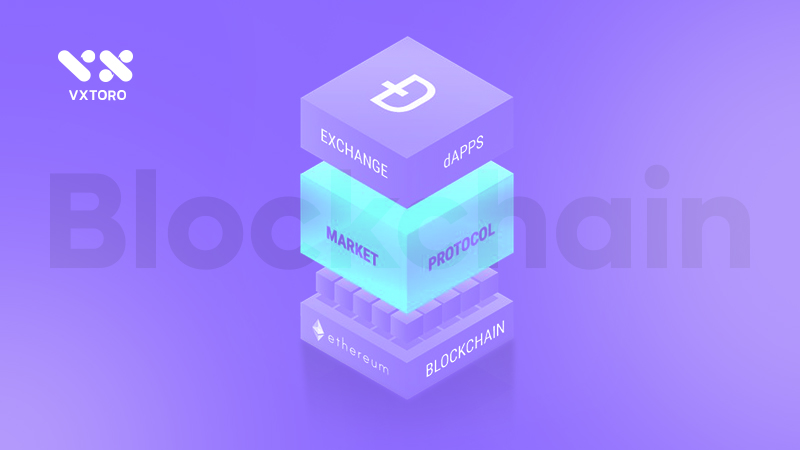
The main role of Layer 1 is to uphold the security and integrity of the blockchain. Also, it accomplishes this through a mechanism that ensures that all network participants agree on the blockchain’s current state. In the meantime, Common methods include Proof of Work and Proof of Stake. So, each one of them has its own benefits and drawbacks concerning security and scalability. Also, Layer one also includes the rules and protocols that mention how transactions are processed and added to the Blockchain layers. But these factors, such as transaction fees and block time, are so important. For example, Bitcoin has a fixed block size of 1 MB and an average block time of around 10 minutes.
In the continuation, one important challenge for Layer one blockchains is scalability. Also, as the network attracts more users and transaction volumes rise, it can be challenging to keep processing times quick and fees low in the system. In the meantime, systems like sharding and layer-2 scaling solutions are frequently suggested to tackle these problems while preserving the fundamental system of decentralization and security in Blockchain layers.
What is Layer 2?
Blockchain Layer 2 is an additional framework and protocol that is constructed on top of an existing blockchain, which is known as Layer one. So, it roles is to improve the scalability and transaction throughput of the system itself. Also, one of the main problems that Blockchain layers one encounters is its capacity to handle a large number of transactions promptly and cost-effectively that suitable for the ecosystem. In the continuation of demand rises, the network system can result in slower transaction speeds and increased fees, too. But Layer two solutions change this issue by allowing transactions to take place off-chain or by changing several transactions into a single on-chain transaction.
Also, the Layer two solutions use state channels and rollups of systems. But State channels enable participants to carry out numerous transactions off-chain, only finalizing the outcome on the main chain. This will reduce the on-chain activity of this layer too. Also, Sidechains function as independent Blockchain layers that run alongside the main chain, providing particular features and capabilities without causing difficulties on the primary network. On the other hand, rollups compile many transactions into one single batch. So we can expect that it is presented to the Layer 1 blockchain too. But this will ensure security while greatly upgrading throughput.
What is Layer 3?
The main purpose of Layer 3 is to enable the creation and execution of decentralized applications that can connect with the blockchain itself. Also, these applications can include anything from decentralized finance services and non-fungible token platforms to gaming and social networking apps, too. In the meantime, by leveraging Layer three, developers can implement better features without the impact of the underlying layer. Also, A very good benefit of Blockchain layers three is its capability to improve user experience through upgraded performance and lower costs. Also, by employing Layer 2 solutions for transactions and data management, Layer three applications can attain quicker processing speeds and reduced fees. So this will make them more available to a wider audience.
Furthermore, Layer three is capable of using multiple protocols and standards, too. So, this will do better among many blockchains and improve the overall ecosystem. In addition, Blockchain layers 3 can also feature middleware solutions that deliver important services like identity verification and analytics. In the meantime, this allows developers to concentrate on creating groundbreaking features while depending on protocols for security and functionality.
Which blockchain layers are better?
Layer one is the foundational blockchain protocol that includes the important network and its important mechanisms. Also, Notable examples include Bitcoin and Ethereum in this ecosystem. In the meantime, Layer 1 solutions play an important role in ensuring security and immutability. Due to their fundamental design, they are typically slower and less scalable. For instance, Bitcoin manages approximately seven transactions per second, while Ethereum handles about 30 TPS. Also, the main update, as Ethereum transitions to ERC-20 Ethereum 2.0, is designed to upgrade the scalability and energy efficiency of the blockchain system.
On the other hand, Layer two solutions are developed on top of Blockchain layers 1 blockchains to improve scalability and transaction speed. Examples of such technologies are the Lightning Network for Bitcoin and Optimistic Rollups for Ethereum. Additionally, by handling transactions off-chain and using them before returning to the main chain, Layer 2 solutions can greatly upgrade transactions per second. Meanwhile, this method continues to lower transaction costs, which will make blockchain technology more accessible for everyday use.
Will it be a blockchain layer 4 in the future?
Layer 4 can be seen as a framework that upgrades usability and user experience across multiple blockchain networks. In the meantime, this layer aims to bridge various Layer 2 and Layer 3 solutions of the blockchain. This will allow for seamless communication and transactions between different ecosystems. Also, these blockchain layers could integrate advanced features such as cross-chain functionality, which will enable users to interact with multiple blockchains without the need for complex processes and intermediary tokens for themself.
In the continuation, the primary motivations for developing Layer 4 solutions are to address the exact system in the blockchain space. Also, as many chains emerge with each having its unique features and communities, the ability to operate across these networks becomes crucial for broader adoption. So, Layer 4 can use decentralized applications that leverage resources from multiple blockchains that can lead to upgrading their functionality and user engagement.
Conclusion
In this article from the VXTORO exchange, we discussed blockchain layers. Also, we describe the different layers of 1 to 4. So, in the end, if you want to know more about the cryptocurrency world, you can simply just read our latest article, named The Difference Between WETH and ETH.